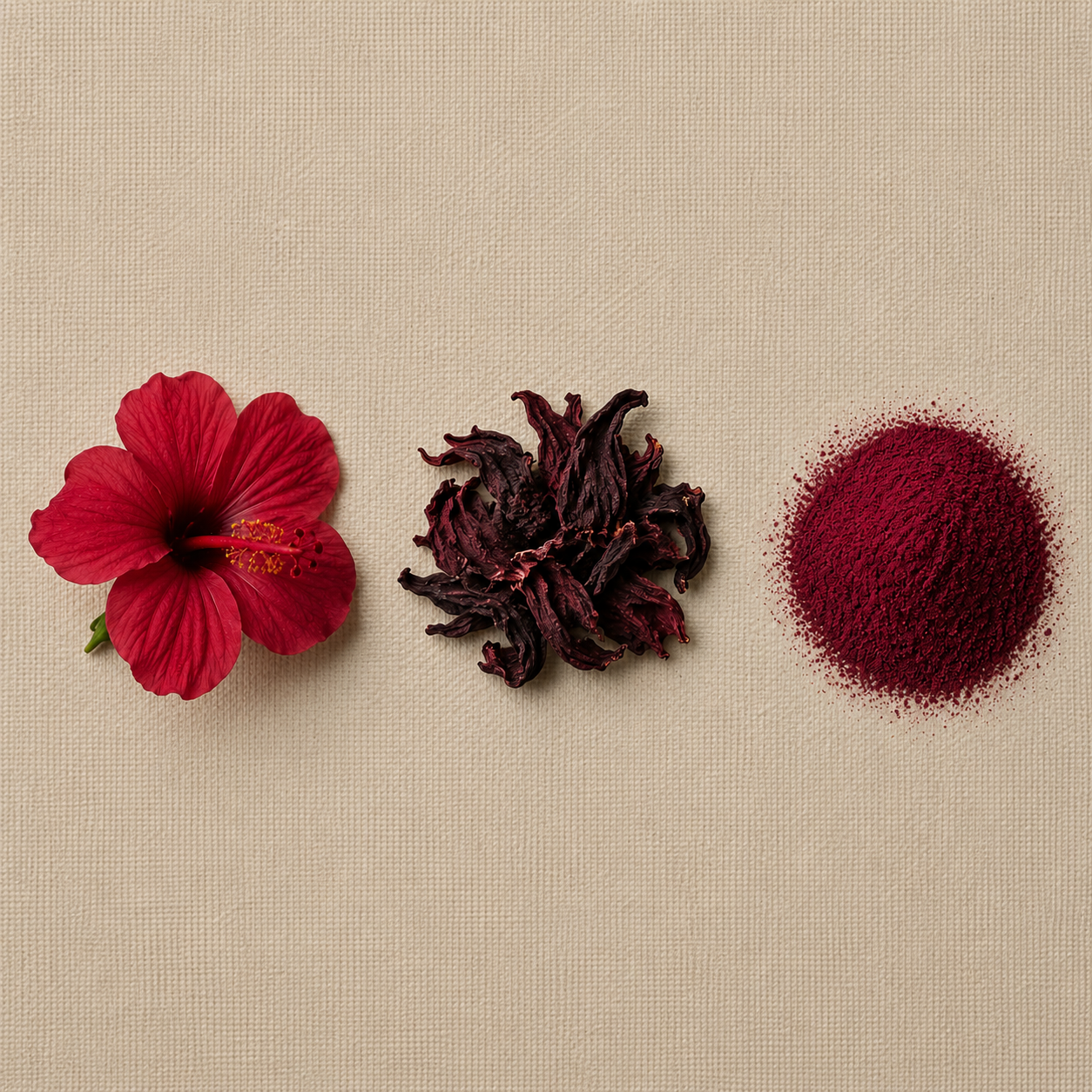
Flower. Dried. Milled. The same plant, at every stage of becoming AUNO.
Hibiscus needs little introduction across West Africa. It's the flower behind the zobo and bissap many of us grew up drinking.
It grows well in warm climates, and West Africa has plenty of that. Farmers dry the petals in the sun until they turn almost black, then sell them in markets by the bag, like the one in this photo. Almost every country in the region has its own name for the drink it becomes: zobo in Nigeria, bissap in Senegal, Guinea and Mali, karkade in Sudan and Egypt. Different names, same flower, made simply by boiling the dried petals in water and straining.
It isn't rare or trendy. It's something people already grew up with, served at parties and sold on the street. We didn't have to teach anyone what hibiscus is. We just had to think about what else it could become, which is how 01 Hibiscus, a finely milled powder made for mixing and blending, came to be.
Dried hibiscus at a market in Lagos, before it becomes 01 Hibiscus.
Flower. Dried. Milled. The same plant, at every stage of becoming AUNO.
This is African wellness. Not reinvented. Reimagined.